Best Base: Positano vs Sorrento vs Amalfi
The Positano vs Sorrento vs Amalfi base decision dominates every travel forum: stay in Sorrento, it's easier. And if all you want is the smoothest arrival and the cheapest dorm bed, that's fair advice. But if the reason you're coming to the Amalfi Coast is to actually wake up in Positano — the cliffside streets, the beach, the sunsets — then optimizing for a train connection misses the point entirely.
First things first: you do not want a car here
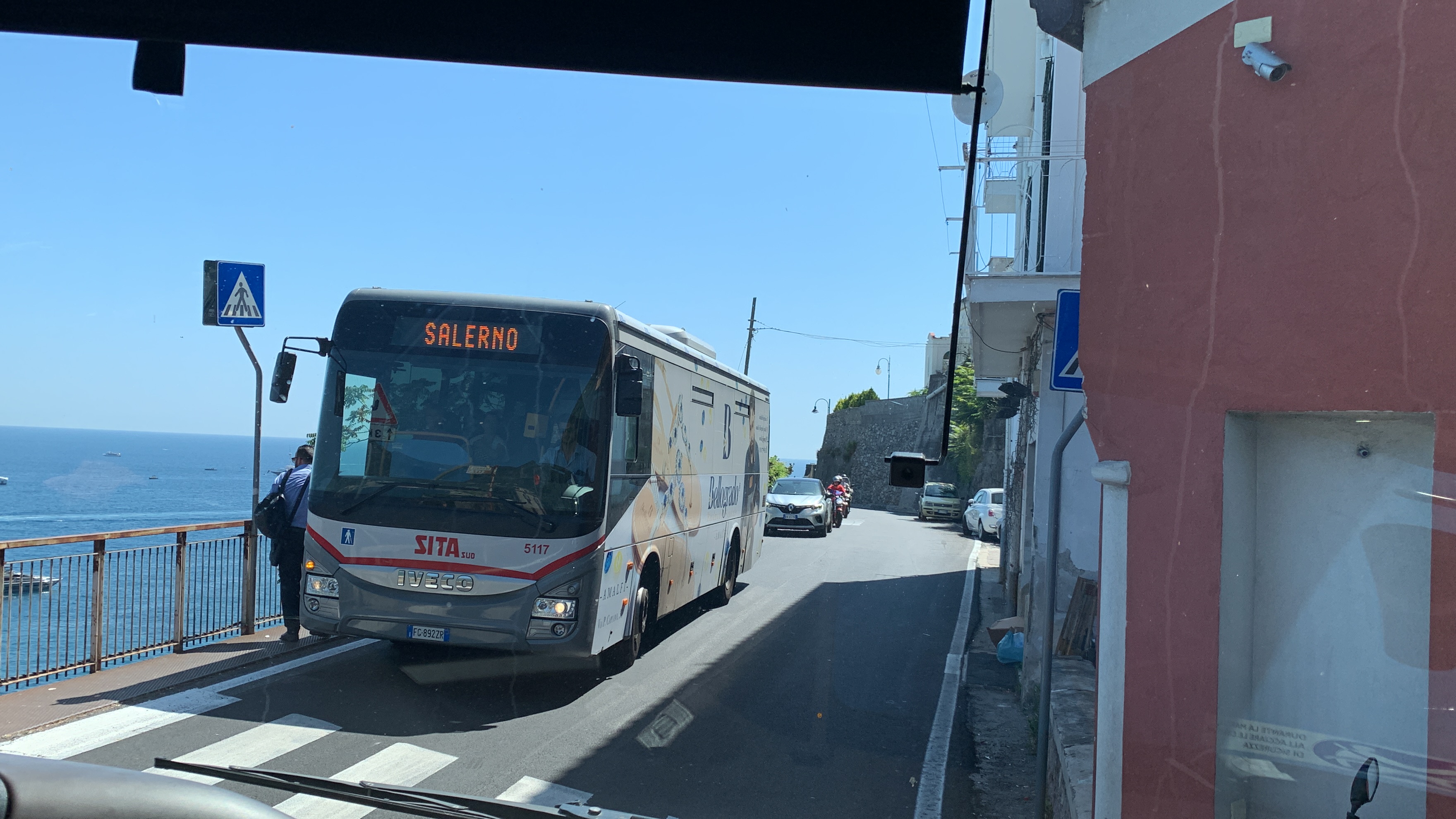
Whichever town you pick, a car is a liability on the Amalfi Coast — not an advantage. The coastal road is a single lane in each direction, choked with tour buses in summer, and every town has the same problem: almost nowhere to park, and what parking exists is expensive.
Positano has several car parks but they charge €10+ per hour in summer — you can easily spend more on parking than on your hostel bed. Sorrento and Amalfi have their own garages at similar rates, and in all three towns the spaces fill early in season. The places you actually want to be — the beaches, the restaurants, the old centres — are pedestrian-only anyway.
The bus and ferry network connects every town you'd want to visit. A car just adds stress, cost, and a parking problem you'll spend half your holiday solving. Travel without one.
Which town should you pick?
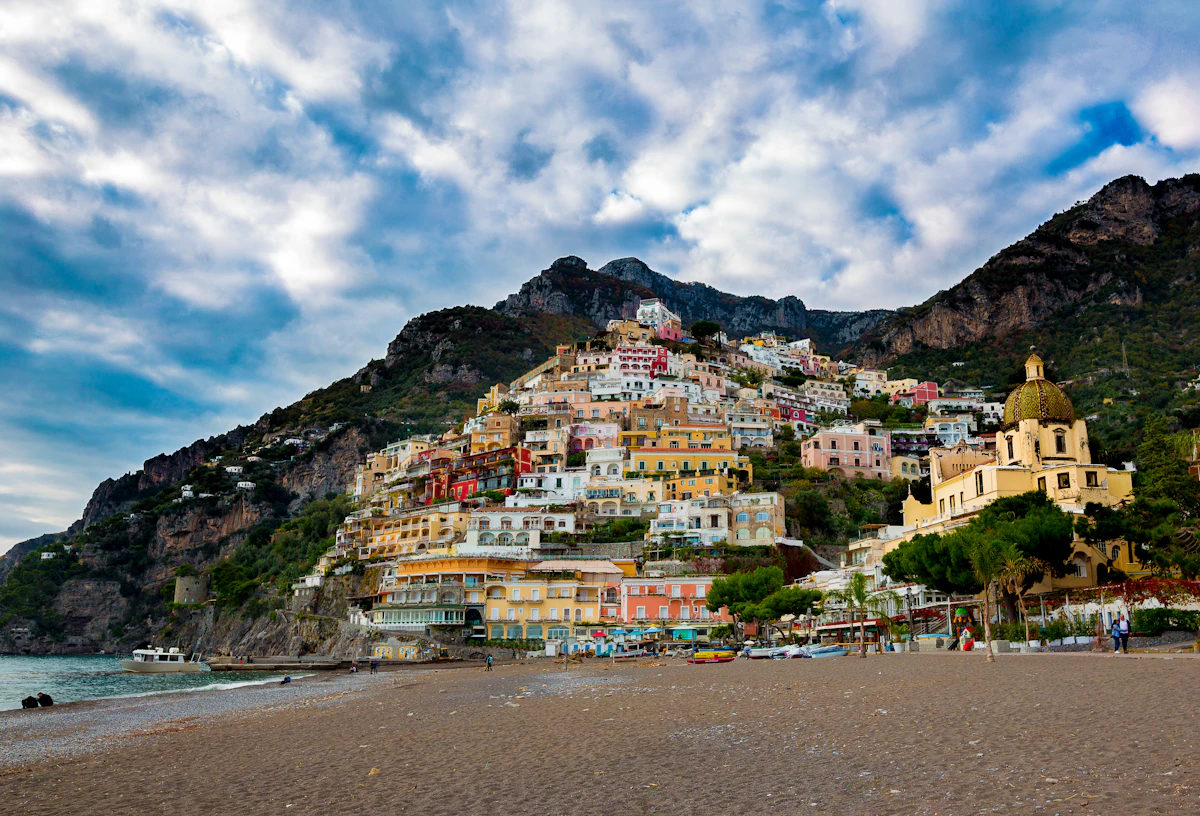
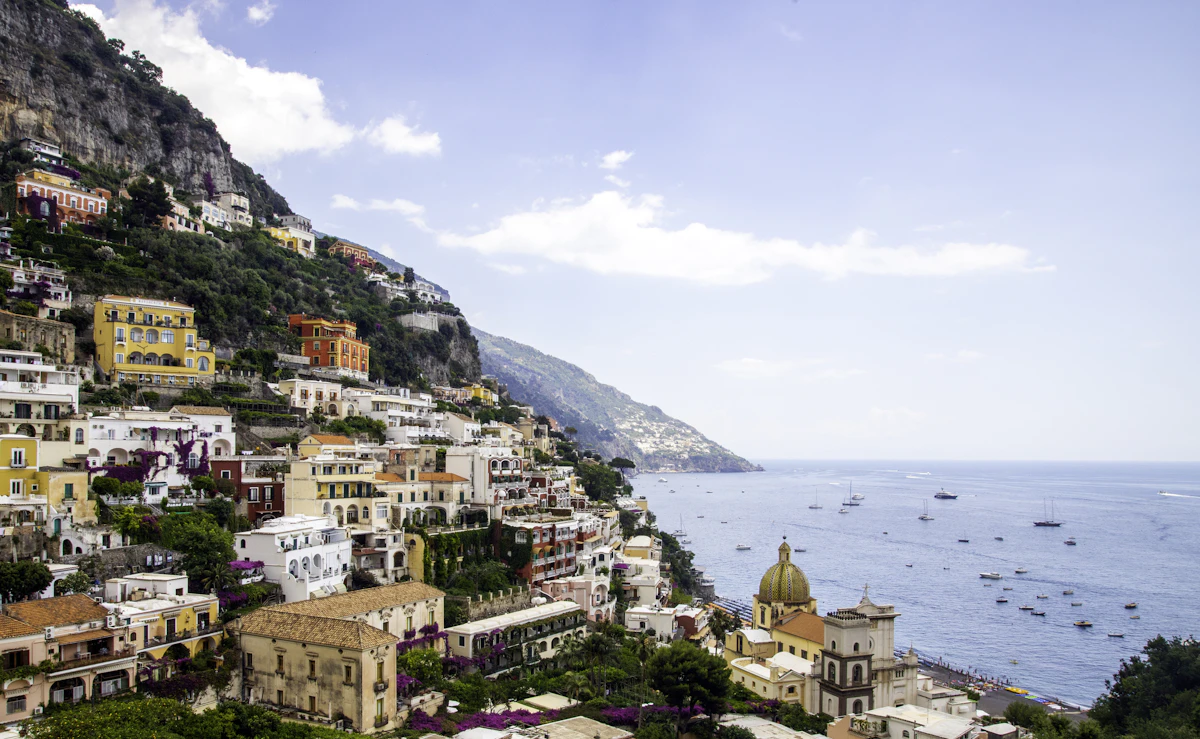
Here's the thing most comparison guides won't say: Sorrento and Amalfi town are pleasant enough, but they're not what makes this coastline famous. If you transported either of them to another stretch of the Italian coast, they'd blend right in. The places that make the Amalfi Coast the Amalfi Coast — the ones you've seen in every photo, every film, every Instagram reel — are Positano, Ravello, and Capri. That's what's unique here. That's what you can't see anywhere else in the world.
Sorrento works as a practical base. It has the train connection to Naples and flat streets. If your trip is mainly about Pompeii and Naples with a side trip to the coast, it makes sense. But Sorrento itself is not the Amalfi Coast experience people travel for.
Amalfi town is a useful transport hub — the bus interchange and ferry dock are steps apart. But after dark it's quiet, the backpacker scene is thin, and there's not much to hold you beyond the logistics.
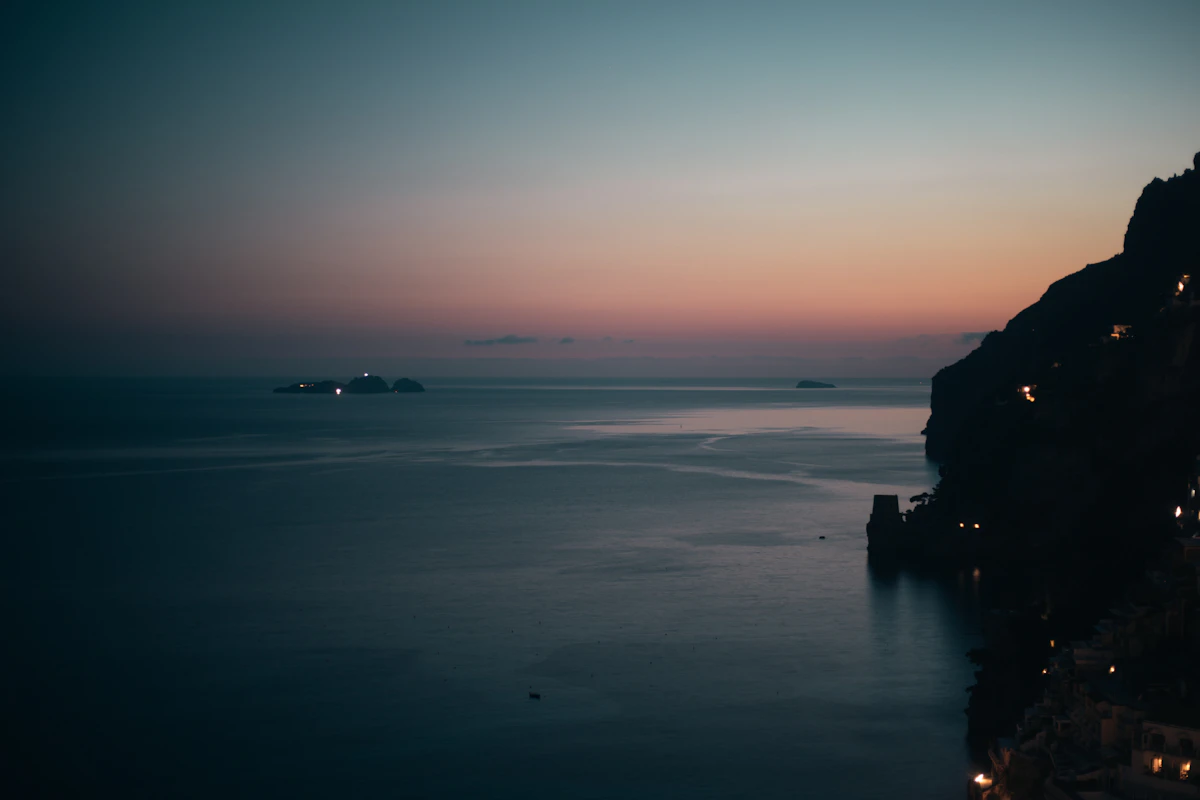
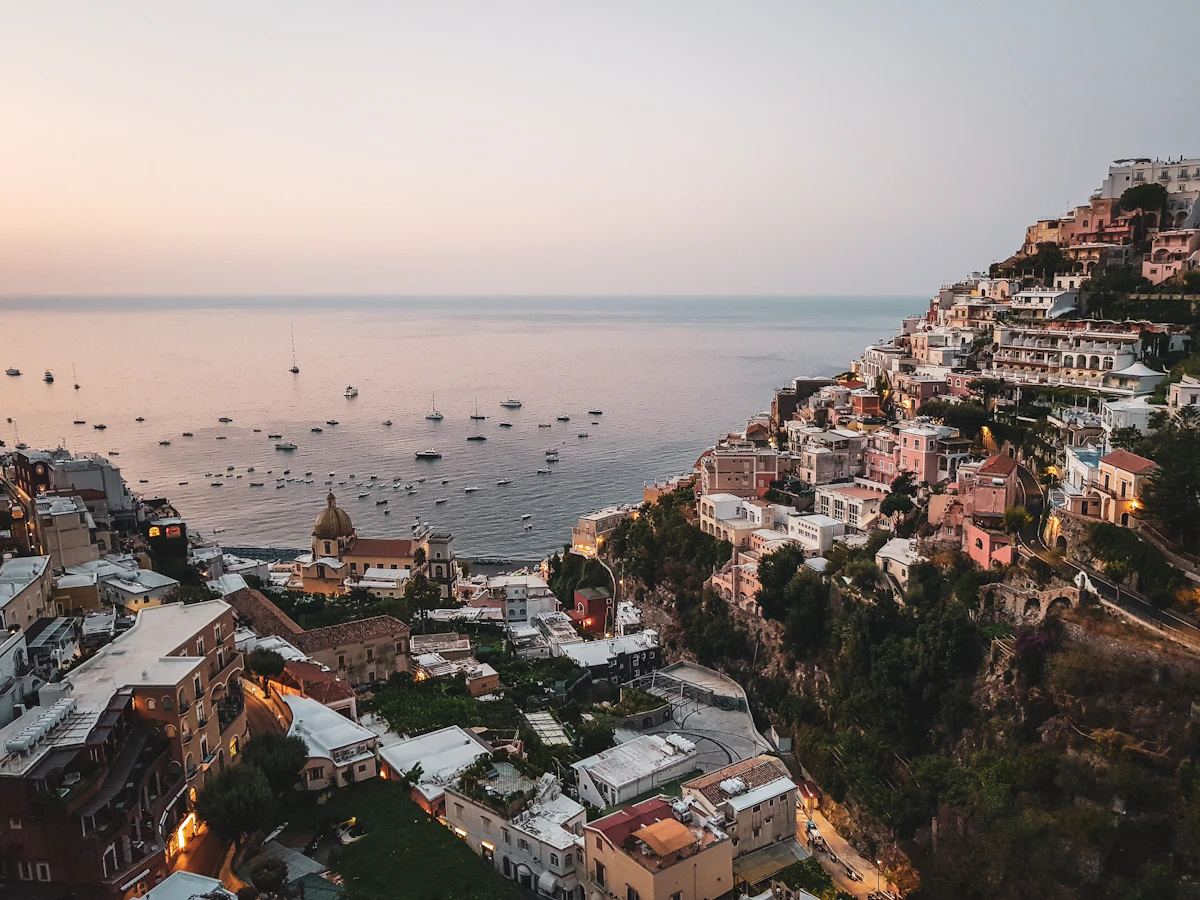
Positano is where you actually want to be. Yes it costs more — but you also spend far less time and money travelling back and forth, because you're already there. And the best part of Positano is the part the day-trippers never see: the evenings. Once the tour buses leave and the crowds thin out, the town transforms. The clifftop lights come on, the restaurants fill with people who actually live here, and you get the sunset views to yourself. That's what staying in Positano buys you. The SITA bus stop at Chiesa Nuova is about 100 metres from Hostel Brikette.
Getting around without a car
Sorrento has the only direct train connection to Naples via the Circumvesuviana line. If you're arriving from the airport or doing Pompeii and Herculaneum, that rail link matters.
Amalfi is a useful on-coast connector. SITA Sud buses and multiple ferry operators all serve the town, and line 5070 connects Amalfi–Positano–Sorrento overland.
Positano is less connected on paper but not nearly as difficult as people make it sound. Buses run in both directions, ferries operate in season, and the arrival overview explains why Chiesa Nuova — the first bus stop in Positano — is the one you want. You step off the bus and you're practically at the hostel door, instead of riding down to the crowded centre and dragging bags back uphill.
What does it actually cost?
Sorrento stretches your budget furthest. That's consistent across platforms and seasons. Positano costs more — but for hostels, the gap is smaller than people expect.
Hostel dorm bed ranges (2026, per night):
For hotels, Positano costs €200+ more per night than Sorrento. For hostels, the gap can be €20–75 depending on season. That's the price of waking up in Positano instead of commuting into it on a day trip and leaving before sunset.
Think about what you'd actually spend from a Sorrento base trying to experience Positano: bus or ferry tickets there and back, lunch at tourist-trap prices because you're on a day-trip clock, and you still leave before evening — which is when Positano is at its best. Stay in Positano on a hostel budget and your daily spend is comparable, but the experience is completely different.
| Shoulder (Apr–May, Sep–Oct) | Peak (Jun–Aug) | |
|---|---|---|
| Sorrento | €20–40 | €35–65 |
| Amalfi / Atrani | €30–50 | €50–90 |
| Positano | €40–75 | €90–140 |
Walkability: the stairs question
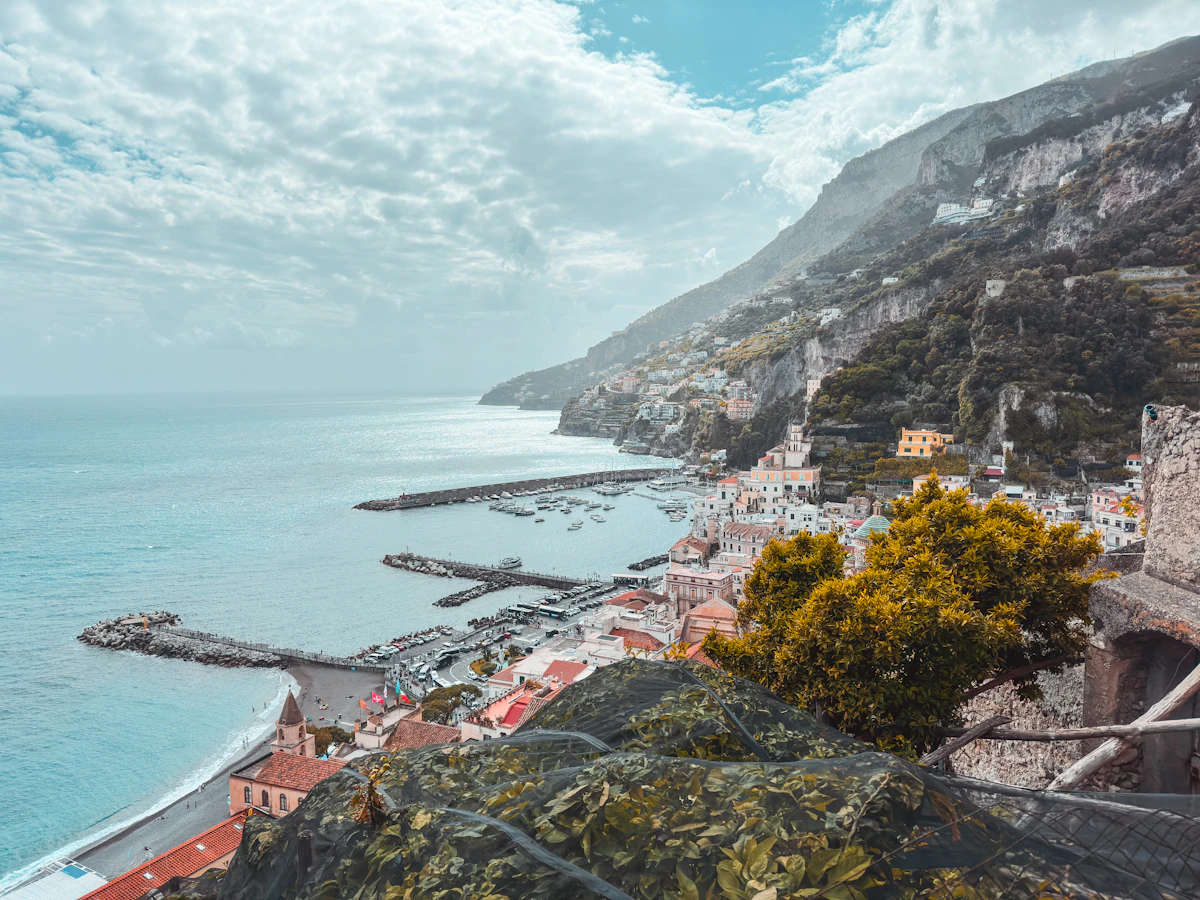
Amalfi is the flattest of the three. The seafront, ferry dock, bus interchange, and main piazza are all within a few minutes of each other on level ground.
Sorrento is mostly flat once you're up in the town centre, though the port sits below a cliff.
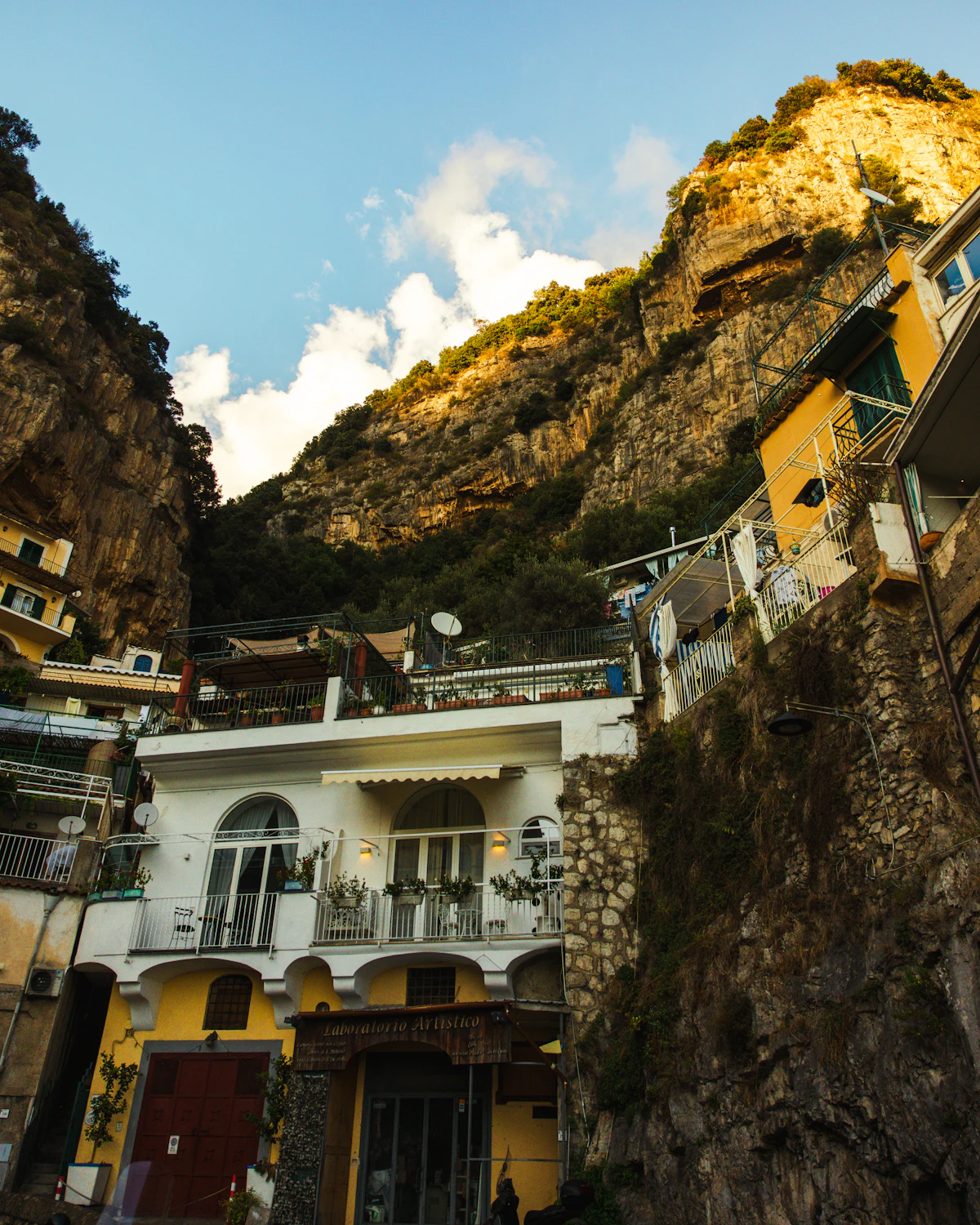
Positano has stairs — there's no getting around it. Steep stairways cut between the alleys, and only one road crosses the town. But Positano also has the Interno bus that runs up and down through town, and if you're arriving by ferry with luggage, arrange for porters to carry your bags up for you. Once you're settled at the hostel near Chiesa Nuova, daily life is a mix of stairs and stunning views — and most guests find that's part of the charm, not a problem.
Nightlife and social scene
This is where Positano really pulls away. Amalfi town is frankly boring after dark — the restaurants close early and there's very little to do. Sorrento has bars, but they're spread out and the vibe is generic — it could be any mid-range tourist town in Europe.
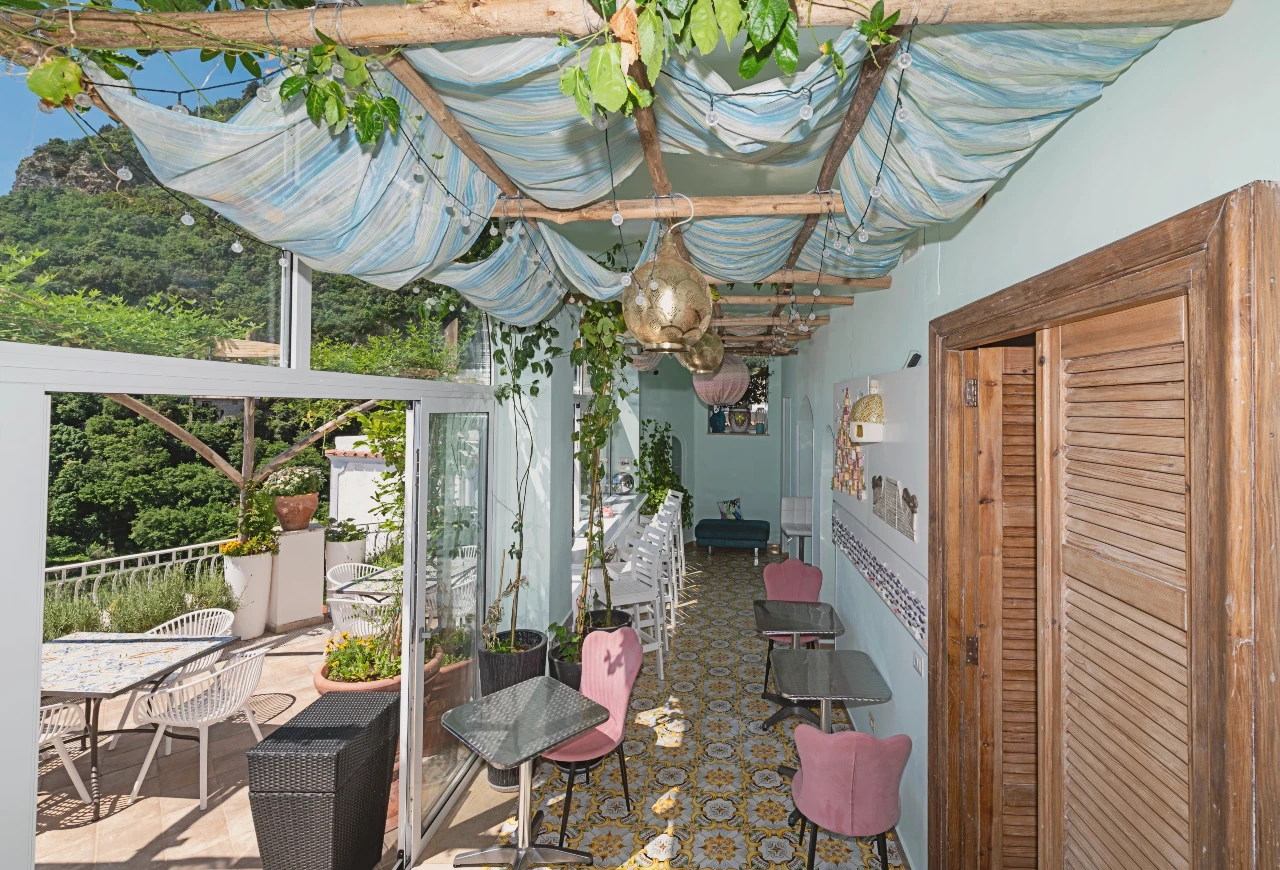
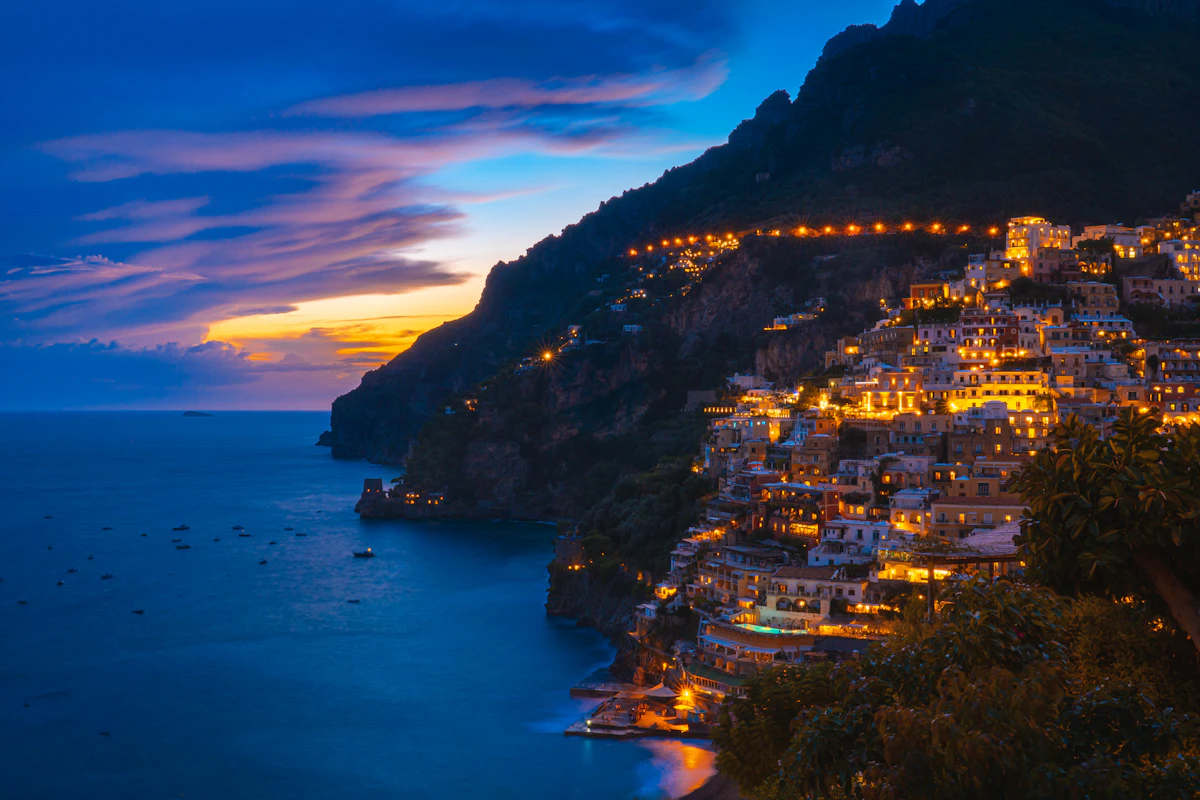
Positano at night is something else. The town is beautiful lit up against the cliff, the bars and restaurants have views you won't find anywhere else, and there's an actual nightclub. It's not Ibiza — but it's chic, it's atmospheric, and on a warm night with the sea below you, it's a genuinely special experience. Hostel Brikette has a terrace, bar, and shared spaces designed for meeting people — so your night can start before you even leave the building.
Day-trip access from each base
For Naples, Pompeii, and the inland side of your trip, Sorrento is the cleanest launch point. The Circumvesuviana connects Naples, Herculaneum, Pompeii, and Sorrento on one line.
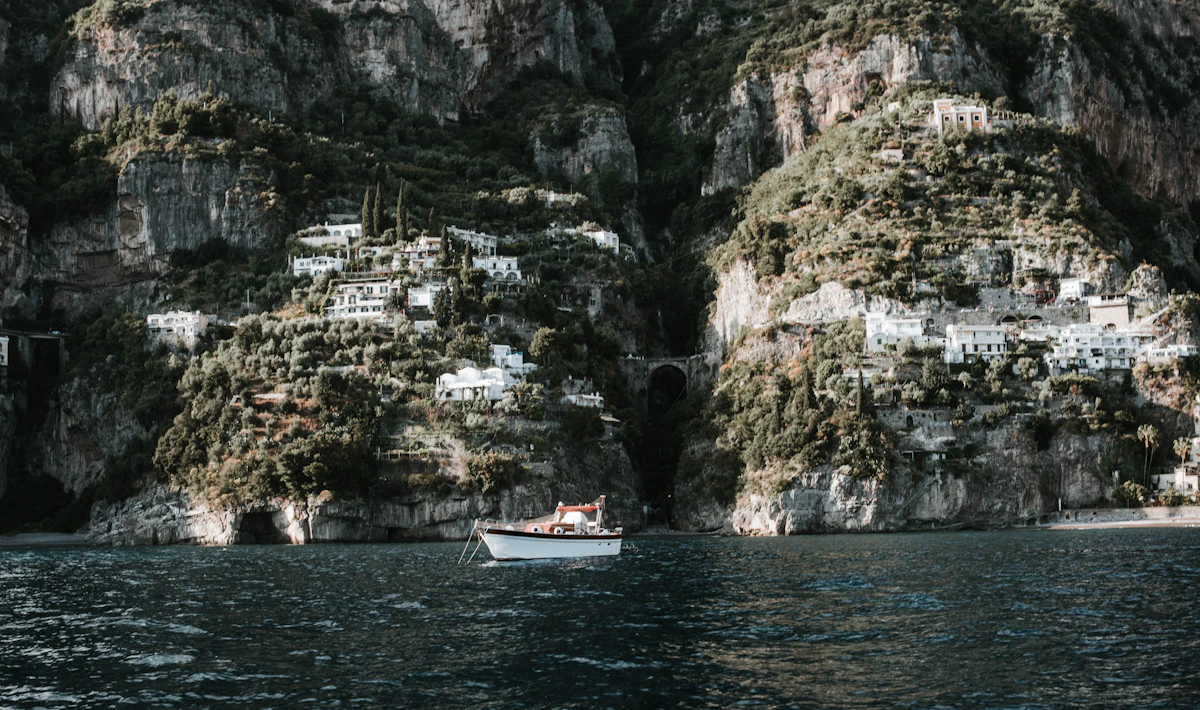
Positano sits in the middle of the coast, which makes it a strong base for day trips in either direction. Amalfi and Ravello are a short bus ride east, Capri by ferry is a straightforward day trip from the waterfront, and the local beaches — Marina Grande and Fornillo — are walking distance rather than a bus ride away.
Amalfi town has the bus interchange and ferry dock close together, but it doesn't have Positano's central position between the key destinations.
Why Positano is worth the effort
The question worth asking before you book: do you want to visit Positano, or do you want to wake up in Positano? Those are different trips.
Waking up here means early access to Marina Grande before the day-trippers arrive, an easy walk to Fornillo beach, and late-evening time in town after the crowds thin out. The sunsets and the empty morning streets are things you simply cannot get on a day trip from Sorrento.
And getting here is easier than the internet suggests. The hostel is about 100 metres from the SITA bus stop, and the arrival guide tells you to get off at Chiesa Nuova — the first stop in Positano — for a five-minute walk rather than overshooting to the centre and dragging bags uphill.
The real reason people stay in Sorrento
Let's be direct: most people stay in Sorrento because it's cheaper. The train connection is convenient, sure, but the main draw is that accommodation costs less — and for travelers on a tight budget, that matters.
But a cheaper bed doesn't mean a cheaper trip — and it definitely doesn't mean a better one. From Sorrento you'll spend half your holiday on buses and ferries trying to reach the places that actually make this coast famous: Positano, Ravello, Capri. You'll pay day-tripper prices for lunch, fight for space on a crowded beach you arrived at too late, and rush to catch the last bus back before you've even seen the sunset. The evening — when Positano is at its most beautiful, when the clifftop lights come on and the crowds disappear — you'll miss entirely. Every single night.
The bottom line
Sorrento if your budget is tight and your main interest is Pompeii and Naples. You'll save on the bed — but you'll spend that saving on transport, day-trip lunches, and ferry tickets trying to reach the coast you actually came to see. And you'll be back in Sorrento every evening while Positano lights up without you.
Amalfi if you want a bus interchange and a quiet night. You could stay in a dozen towns like it across Italy.
Positano if you came to the Amalfi Coast for the Amalfi Coast. The stairs are real, the dorm costs more per night, but you're already inside the place everyone else is burning daylight trying to reach — and when they leave, the town is yours. The chic bars, the cliffside sunset, the nightclub, the empty morning beach. That's the trip. And there's a hostel here that makes it work.
And whichever you choose: leave the car behind. Buses, ferries, and your own two feet are all you need.
Tips
- Book Positano accommodation early in peak season — with only one hostel in town, beds go fast.
- If you're torn, consider splitting: two nights in Sorrento for Pompeii and Naples logistics, then three nights in Positano for the coast itself.
- From the hostel, guests regularly do Amalfi and Ravello as day trips on the same bus ticket — the 5070 covers both directions. Staff at reception can confirm the current schedule and help you time the last bus back.
- Arriving by ferry from Salerno or Naples tends to be the smoothest way into Positano — no bus stress, sea-level arrival, and the hostel is a short walk uphill from the ferry dock.
FAQs
Do I need a car on the Amalfi Coast?
No — and you're better off without one. Parking is scarce and expensive everywhere (€10+ per hour in Positano, similar rates in Sorrento and Amalfi), the coastal road is narrow and congested, and the town centres are pedestrian-only. Buses and ferries connect every town you'd want to visit.
Is Positano too expensive for backpackers?
Not at hostel level. Dorm beds in Positano run €40–140 per night depending on season, compared to €20–65 in Sorrento. The gap is real but manageable — especially if you're eating simply and using the free beaches. The trade-off is sleeping in Positano rather than commuting in for a few hours.
Which town has the best nightlife?
Positano, and it's not close. The town is beautiful at night, the bars have cliffside views, and there's an actual nightclub. Sorrento has bars but the vibe is generic. Amalfi is quiet after dark.
How do you get between Sorrento, Positano, and Amalfi without a car?
SITA Sud buses and ferries. The 5070 bus route connects all three towns overland, and ferry operators run sea routes between them in season. For Positano, get off at Chiesa Nuova (the first stop) if you're heading to the hostel — it saves a steep uphill walk from the centre.