Staying safe in Positano & the Amalfi Coast
Plan the route you can manage, check conditions for the day and keep a workable return. Positano’s stairs, road approaches and sea arrivals need different preparations; the shortest line on a map is not always the best choice with luggage.
Use this guide to prepare an arrival, beach day or walk. Follow current local instructions and the actual operator’s directions. This guide was reviewed on 27 October 2026; weather notices, trail access, sailings and pharmacy opening still need checking for the day you use them.
On this page
Stairs, road approaches and luggage
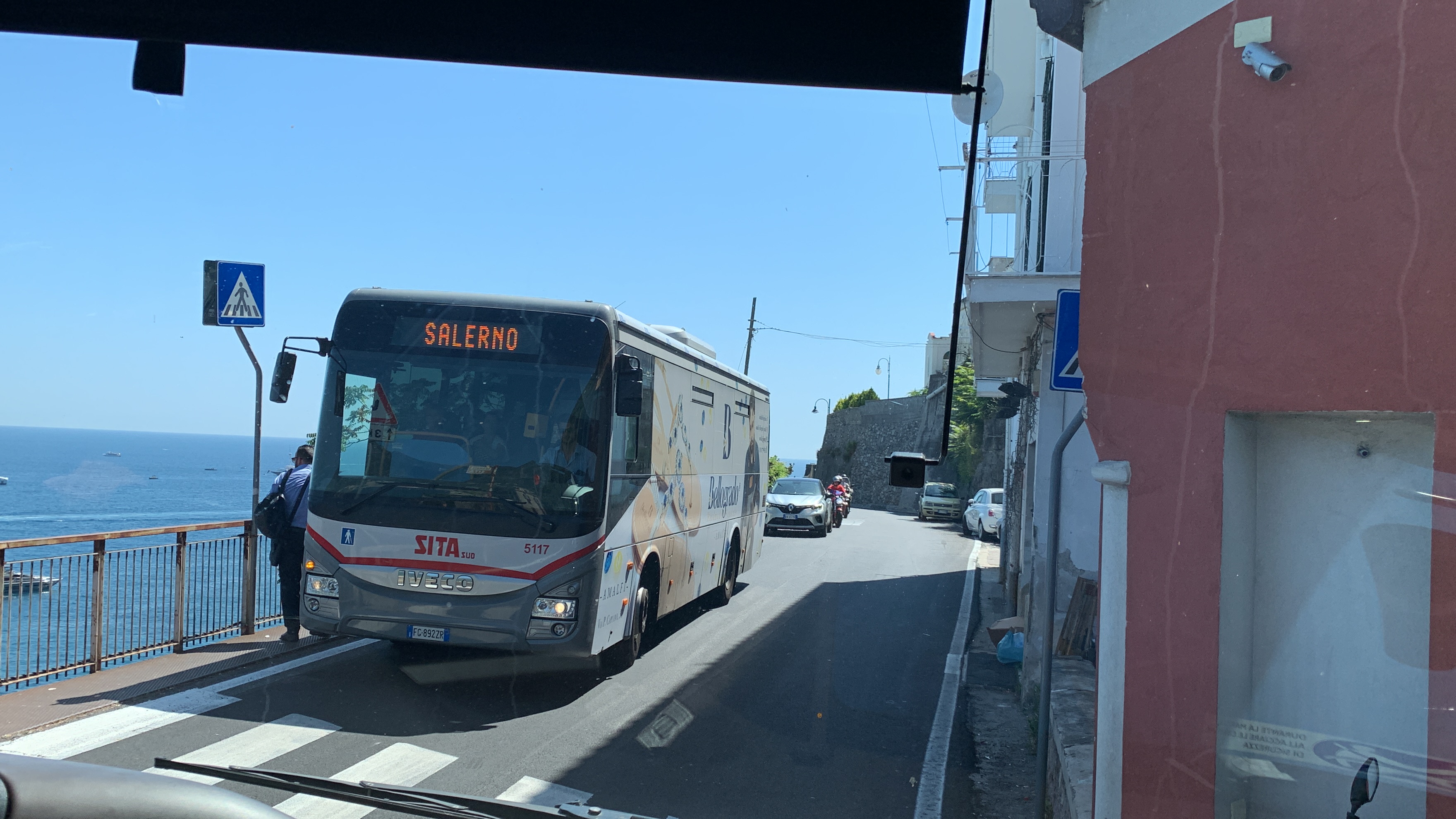
Check the complete route, not just the name of a bus stop. From SITA near Chiesa Nuova and Bar Internazionale, the approach to Brikette along Via Marconi is about 120 m on the main road, followed by entrance stairs. That distance starts at the road arrival, not the ferry dock.
With luggage, use the ferry-dock-to-hostel route to compare the local-bus and walking legs. The Interno return stop beside Tabacchi Cafiero on Viale Pasitea is different from the SITA arrival near Bar Internazionale. A bus ride does not remove every remaining step.
Choose a load you can manage on stairs and keep your hands available where needed. Agree any porter assistance directly, including delivery point, remaining stairs and full price. A porter carries bags, not passengers; availability and coverage need a separate agreement.
Pause somewhere clear of traffic and the walking route, with space from edges. For evening walks, carry a charged light and check your return before leaving. If access or mobility is a concern, confirm the entrance and room access with the hostel before choosing a stay.
Buses and ferries: tickets, bags and a usable return
Check SITA’s current timetables and service notices for the actual date, direction and stop. Buy the correct ticket and follow its validation instructions; the SITA ticket guide explains the process. A ticket does not reserve a seat.
Follow the driver’s directions about boarding and bags, and keep passageways clear. Do not assume a particular luggage compartment, assistance with lifting or a place on the next bus.
For ferries, check the actual carrier’s sailing and boarding information and follow crew instructions on luggage. Travelmar’s FAQ covers its own conditions; other carriers may differ. Keep essential documents and valuables with you rather than leaving them in a larger suitcase.
Choose a return that leaves time for queues, changes and the final uphill journey. A cancellation does not guarantee a bus seat or make a ferry ticket valid on land. Use the transport-network guide to compare a complete alternative before a flight, train or check-in deadline.
Sea conditions, sun and heat
Read the beach’s signs and flag guidance and follow the lifeguard’s instructions. A red warning flag means staying out of the water. Do not dive into water of unknown depth; rocks and shallow areas can be hidden. These precautions are covered in FCDO’s Italy safety advice.
Check the entry and exit you will use, and decide against swimming when conditions or local instructions are unsuitable. Water shoes can help with a pebbly approach, but they do not make sea conditions suitable or replace the warnings.
Combine shade, protective clothing and sunscreen rather than relying on sunscreen alone. NHS sun guidance recommends SPF 30 or higher with UVA protection and reapplication after swimming, towel drying or sweating, following the product instructions. Its UK clock-time examples are not a local Positano timetable.
Carry drinking water, plan opportunities to refill from a confirmed drinking-water source and adapt steep or exposed walks to the heat. There is no single bagged-water amount that guarantees enough for every person and outing. If someone becomes confused, collapses or is seriously unwell in the heat, get urgent help through Italy’s 112; the NHS heat guidance explains warning signs. Its UK telephone numbers are not the numbers to use in Italy.
Belongings and emergency contacts
Keep essential contact and payment information accessible if a phone or bag is lost. Check the storage facilities for your actual room, and use the emergency and valuables sections below to prepare before a day out.
In an emergency
Call 112 for urgent police, fire or medical assistance. The European Commission identifies it as the free emergency number throughout the EU. It is for emergencies, not general travel information. European emergency-number guidance
The Italian tourism authority’s emergency guidance also lists these service-specific numbers.
Give your location as clearly as possible: the town, road or trail, a nearby landmark and any location information available on your phone. Follow the operator's instructions. Do not delay an emergency call while searching for a hostel's reception number.
Before travelling, save the accommodation address and contact details somewhere accessible without having to recover an email account. Keep your insurer's assistance contact and an emergency contact available as well. A second way to access essential information is useful if the phone is lost, damaged or out of power.
| Situation | Number in Italy |
|---|---|
| Emergency assistance and routing to the appropriate service | 112 |
| Sea rescue | 1530 |
| Urgent medical assistance | 118 |
| Fire service | 115 |
Keep control of documents and valuables while moving
Australia’s Smartraveller advice highlights theft risks around transport and tourist locations. That national advice does not establish a Positano crime rate, but supports care with bags and documents during a multi-leg journey. Smartraveller’s Italy advice
Keep essential items where you can monitor them, particularly while handling tickets or moving luggage. Avoid putting every payment method and all documents in the same easily lost item. Retain secure access to the information needed to contact your bank or report a lost passport.
Use the facilities listed for your actual room rather than treating a shared room as private storage. Brikette’s guest-help information covers locker arrangements; check the locker, lock type and what fits before deciding what to bring.
A locker is one precaution, not a guarantee against loss. Travel with valuables you genuinely need and understand what your insurance covers.
Weather alerts and hikes: check before setting out
Use Campania Civil Protection’s bulletin and alert portal. Read the bulletin’s issue date, validity period and relevant area; an old green panel or a general weather icon is not today’s clearance for a walk or sailing. Follow current local restrictions.
For a hike, use the Path of the Gods planning guide and the Positano municipality’s trail advice. Check current access and conditions separately. A route description does not establish that a trail is open or suitable for your ability that day.
Choose footwear, equipment and a route appropriate to the terrain and weather. Leave your route and expected return with someone you trust and check that your insurance covers the activity. Telling the hostel about a plan does not establish a monitored rescue or check-back service. Keep a non-hiking alternative if conditions change.
Choose a room and arrival plan that fit your trip
Brikette is at Via Guglielmo Marconi 358. Compare the actual room descriptions for beds, bathroom and room-specific facilities, then confirm any access requirements before booking.
Room check-in is 15:00–22:00. Contact the hostel promptly if a delay threatens that window; planning an evening out or a late sailing does not extend it. Keep your route and the entrance stairs in the arrival plan.
If you need to leave bags before or after your room stay, read the luggage-storage guide and enrol through the guest app. Storage requires the hostel to receive your agreement to the terms and conditions and is subject to availability. Arrival-day bag drop for guests checking in starts at 10:30; it is not early room access.
After checkout, storage is free until 15:00. Bags not collected by 15:00 are automatically transferred to the porters, who charge for storage afterwards. Build the collection time into your day rather than leaving it to the last possible connection.
Before leaving for the day
- Check the real outward and return route, including the final walk.
- Read current sea, weather and access instructions for your activity.
- Save Italy’s emergency contacts, your address and a usable map offline.
Practical preparations
- Use the complete approach guide when deciding how to manage luggage and steps.
- Carry a charged light for evening walking and choose a return you can use.
- Check the actual carrier’s ticket, boarding and bag conditions.
- Use the parish, municipality or operator for any date-specific programme rather than an old guide.
- Keep a simpler alternative if a sailing, beach or hike becomes unsuitable.
- Use the packing guide to prepare for walking, sun and luggage handling.
- Keep bag-collection and room-check-in deadlines separate from day-trip plans.
Step by step
- Choose a suitable route: Include access, stairs, luggage and your own ability, not just map distance.
- Check the day’s conditions: Read the actual operator information, weather bulletin and local access notices.
- Plan a usable return: Leave time for waiting, changes, the final walk and hostel deadlines.
- Save what you need: Keep emergency contacts, location information and an offline map available.
FAQs
Is tap water safe to drink?
Use taps or fountains identified as drinking-water sources and follow any current local water notice. If the source is unmarked or a restriction is in force, ask the hostel or local operator before filling your bottle, or use sealed drinking water. This guide has not verified every tap or a current town-wide potability clearance.
Are there areas to avoid at night?
No street-by-street nighttime safety assessment has been established here. Choose a route you can identify and walk in the available lighting, check access and transport before leaving, and use an officially licensed taxi when that fits your return plan. Confirm the full price and destination directly; do not assume late buses or a ride arranged by the hostel. The solo-travel guide can help with planning your stay, but no route or room choice guarantees safety.