Rome to Positano without a car
Overview
There is no railway station in Positano. From Rome, compare a train to Naples followed by Sorrento and a bus, or a train to Salerno followed by a ferry or buses. Choose the whole journey for your date, including the last connection and the approach to your accommodation.
On this page

Compare complete routes
Compare selected departures with Trenitalia and Italo. A train's advertised journey time covers only the rail leg. Read Salerno versus Naples for the wider gateway choice.
| Route | When it can suit you | Main trade-off |
|---|---|---|
| Roma Termini → Napoli Centrale → Sorrento → Positano | You want a land route using the Circumvesuviana and SITA bus | Several transfers; queues and road traffic can extend the final legs |
| Roma Termini → Salerno → Positano ferry | A train and an operating ferry fit your date | Weather and seasonal schedules; luggage rules and an uphill arrival from the dock |
| Roma Termini → Salerno → Amalfi → Positano by bus | You need a land alternative from Salerno | Change at Amalfi; allow for both bus connections and road delays |
A Rome airport is a separate starting point
From Fiumicino, the Leonardo Express serves Roma Termini; FL1 regional services serve other Rome stations, so check the actual interchange before buying tickets. Include baggage collection and the airport transfer before choosing a southbound train. From Ciampino, check the current airport-to-city connection rather than treating the airport as Termini.
Leave room for delays, especially when the flight and train are separate bookings. If the remaining connections no longer fit, change the plan before purchasing a non-flexible ticket.
Check the station-to-bus or station-to-pier transfer
For Naples, follow Napoli Centrale to Positano by train and bus and check EAV for the Sorrento rail leg. For Salerno, confirm which pier your sailing uses; do not assume every departure leaves beside the railway station. Check Travelmar and the Salerno route guide.
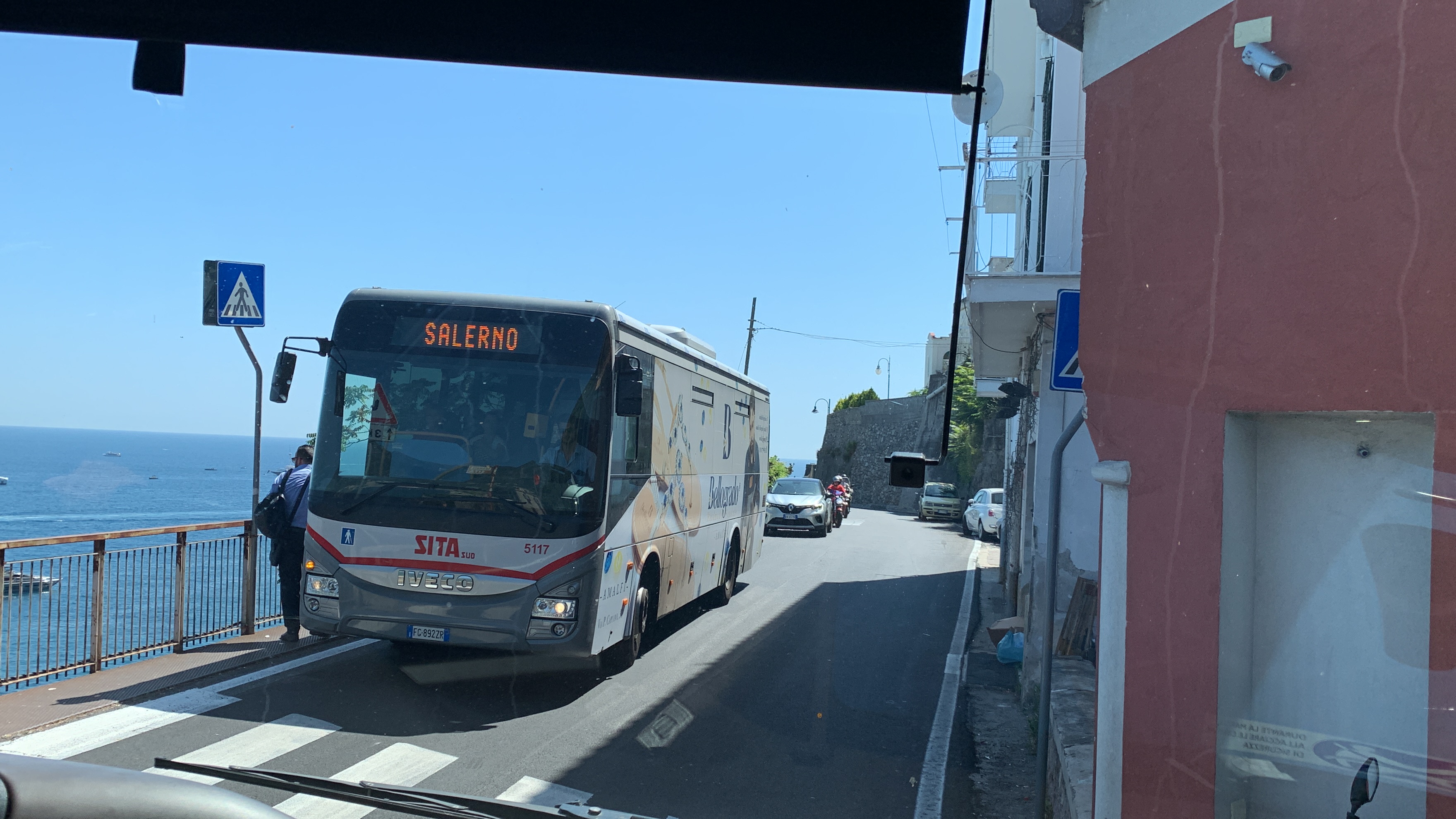
Keep a workable land alternative. Use SITA Sud's dated timetables for the specific direction and travel day. A scheduled service can still face disruption; separately booked legs need a connection buffer.
Finish the journey at the hostel, not at the dock
For Brikette, SITA arrivals use Chiesa Nuova / Bar Internazionale on Via Marconi. The final main-road leg is about 120 m, then entrance stairs. See the photographed approach.
A ferry arrives at beach level. The local Interno bus drops beside Tabacchi Cafiero on Viale Pasitea, followed by the connector uphill to Via Marconi. It does not drop outside Bar Internazionale. Use the luggage-aware ferry-arrival route for the full sequence and conditional porter options.
Room check-in is 15:00–22:00; arrange an arrival outside that window in advance. Compare rooms for your dates after checking that your arrival plan works. For bags before check-in or after checkout, use the separate luggage-storage guidance.
A two-night version that is genuinely worthwhile
Day 1: leave Rome with enough time to reach the coast and the accommodation within the agreed arrival arrangements. Keep the afternoon or evening local. Do not add a ticketed excursion that depends on every connection running perfectly.
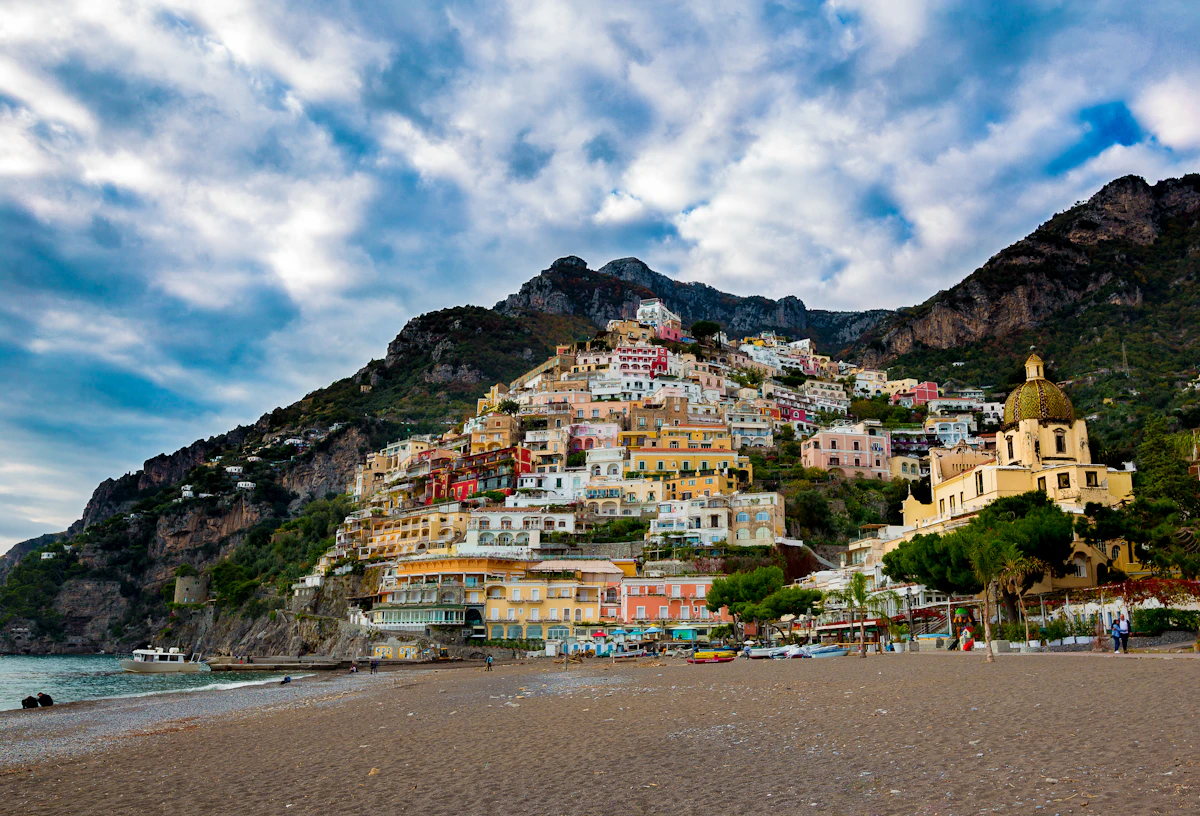
Day 2: spend the day in Positano. Explore, choose a local beach arrangement and leave time for a meal without rushing to another departure. Spiaggia Grande and Fornillo offer different local options; separate public access from paid services when planning the cost. [I02-6]
Day 3: depart on a route that protects your Rome commitment. A short breakfast or walk may fit, but do not sell yourself a second full day that the journey does not leave.
This version works when sleeping in Positano and enjoying one complete local day are enough. It is less convincing when the main reason for travelling is an activity outside the town that consumes the only full day.
What the third night changes
With three nights, keep the same local day and give the second full day a clear role. You might choose a properly planned hike, a coastal visit, a boat excursion or simply more time in Positano.
Do not add all four because another night appeared. The value is having a choice and some margin, not multiplying the number of departures.
A flexible second day also lets you respond to conditions or repeat something you enjoyed. For a solo traveller, it creates more opportunity for a plan made after arrival, without requiring the trip to depend on finding company.
If one paid experience is essential, verify it before making the stay non-refundable and retain an alternative. A ferry ticket is not a swimming excursion, and transport to a trail does not provide a guide or guarantee suitable conditions.
Sources: I02
FAQs
Is Salerno always faster than Naples?
No. Compare the selected train, onward departure, transfer and final hostel approach. A ferry can be useful when operating, while a missed connection can outweigh a shorter train leg.
Can I use this route in winter?
Check the actual rail and bus services for your date and keep a land route. Ferry schedules and accommodation opening vary; do not assume a summer timetable or room availability.
Can I take a large suitcase?
Check each operator's luggage conditions. Transfers, crowded vehicles and Positano's stairs make lighter luggage easier; porter help must be arranged and remains subject to availability.