Amalfi Coast on a gap year
A gap year Amalfi Coast stop is more realistic than most people assume — with one condition: treat it as a smart 3-to-5-day hit, not a luxury holiday. If you are London-based on a WHV or doing the classic Europe loop and keep seeing Positano on Instagram, the real question is not whether it looks good. It does. The question is whether it fits a normal backpacker route and budget. Cheap London–Naples fares do exist, the public transport chain is straightforward, and the daily cost is high by backpacker standards but nowhere near as impossible as people assume. From the hostel in Positano, staff regularly brief guests on exactly this trip — what to book in advance, where to spend and where to save.
Getting there cheaply from London
For a London-based gap-year traveller, this is the part that makes the Amalfi Coast viable. Current fare calendars show London–Naples flights from £26 return, with one-way lows from £13 on the cheapest dates, and the average direct flight time is about 2 hours 47 minutes. Booking roughly 40 days ahead, with April tending to show the cheapest fares on the calendar.
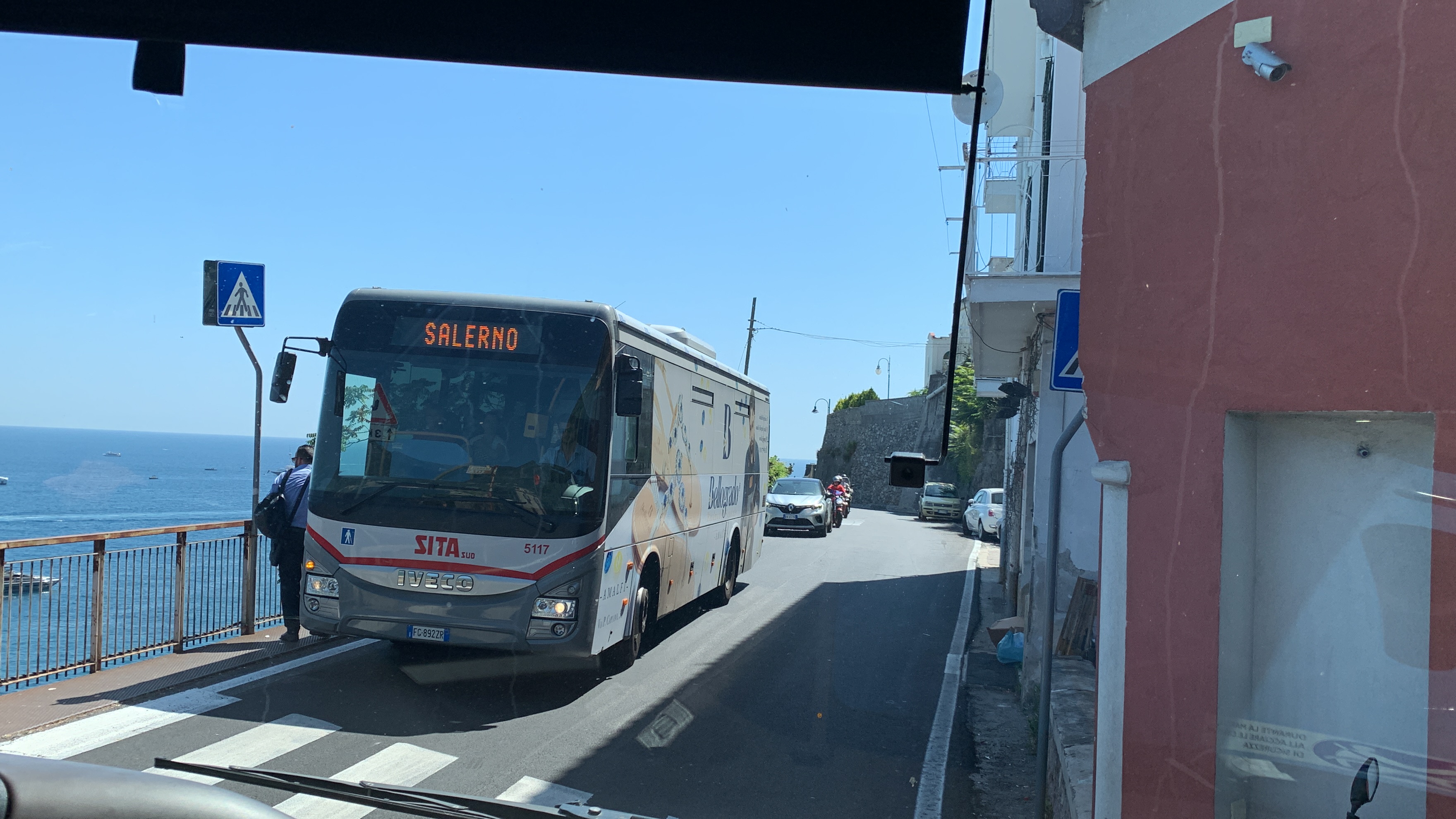
Once you land, the cheap chain is simple. The airport-to-city Alibus runs between Naples Airport and Napoli Centrale in about 15 minutes and costs €5. From there, the Circumvesuviana to Sorrento is €4.60, and the SITA bus onward to Positano is currently around €2.60 for a single ticket, with the COSTIERASITA day pass generally around €10.
That means the ground-transport part is not what breaks the trip. The cheap London to Positano one-way can still sit inside roughly £60–80 if you book early and travel with cabin luggage only — checked bags easily add £20–40 each way on budget carriers. For the full step-by-step, Naples to Positano by train and bus covers the Circumvesuviana and SITA connection in detail, and how to get to Positano gives the full arrival options.

How it fits real gap-year routes
This is not some awkward detour that only works for honeymooners with private transfers. It fits normal gap-year movement surprisingly well.
A very standard version is London → Barcelona → South of France → Cinque Terre → Rome → Amalfi Coast → Greece → Croatia → back to London. Another is the faster WHV pattern: work in London, use a bank holiday or annual leave block, fly to Naples, do Positano properly, fly back, and return to work with the place actually ticked off instead of endlessly postponed. The Positano from London guide goes deeper on that specific pattern.
It also works well as the Southern Italy hinge in a west-to-east route. If you are coming through Portugal, Spain, and central Italy, the Amalfi Coast is a strong last Italy stop before shifting east toward Greece or Croatia. Backpacking Southern Italy covers the wider route logic if you are planning more than just the coast leg.
How many days actually make sense
3 days is enough for a bank-holiday strike mission. You will not “do everything,” but you will get the visual hit, one beach day, one town-hopping day, and one proper Amalfi-Coast evening.
5 days is the sweet spot. This is the version I would recommend to most gap-year travellers. It gives you room for Positano itself, one ferry day, one bus day, one hike or beach reset, and one margin day for weather or transport mood swings.
7 days works if you have time and want a slower, fuller version. Use backpacker itineraries from Positano for the 3 and 5-day plans, and 7-day itinerary without a car for the longer version. The 7-day version adds an east-coast day (Minori/Maiori by bus), a Praiano swim day, and optionally a Capri day — budget roughly 48.50 € return for the Capri ferry including the 5 € island tax.

A realistic daily budget
Using ECB reference rates (EUR 1 = GBP 0.86 / EUR 1 = AUD 1.64), a realistic shoulder-season planning budget looks like this:
That is not ultra-cheap Europe, but it is not 'rich couples only' money either. You can pull the total down on quieter days by leaning on free things to do in Positano, Positano's beaches, and Path of the Gods (free, 7.8 km, about 3 hours). Then spend properly on one scenic ferry or one standout meal instead of buying the premium version of every hour.
| Spend category | Euro | Rough GBP | Rough AUD |
|---|---|---|---|
| Hostel dorm | €35 | ~£30 | ~A$57 |
| Food | €20 | ~£17 | ~A$33 |
| Local transport | €8 | ~£7 | ~A$13 |
| Activities | €15 | ~£13 | ~A$25 |
| Daily total | €78 | ~£67 | ~A$128 |
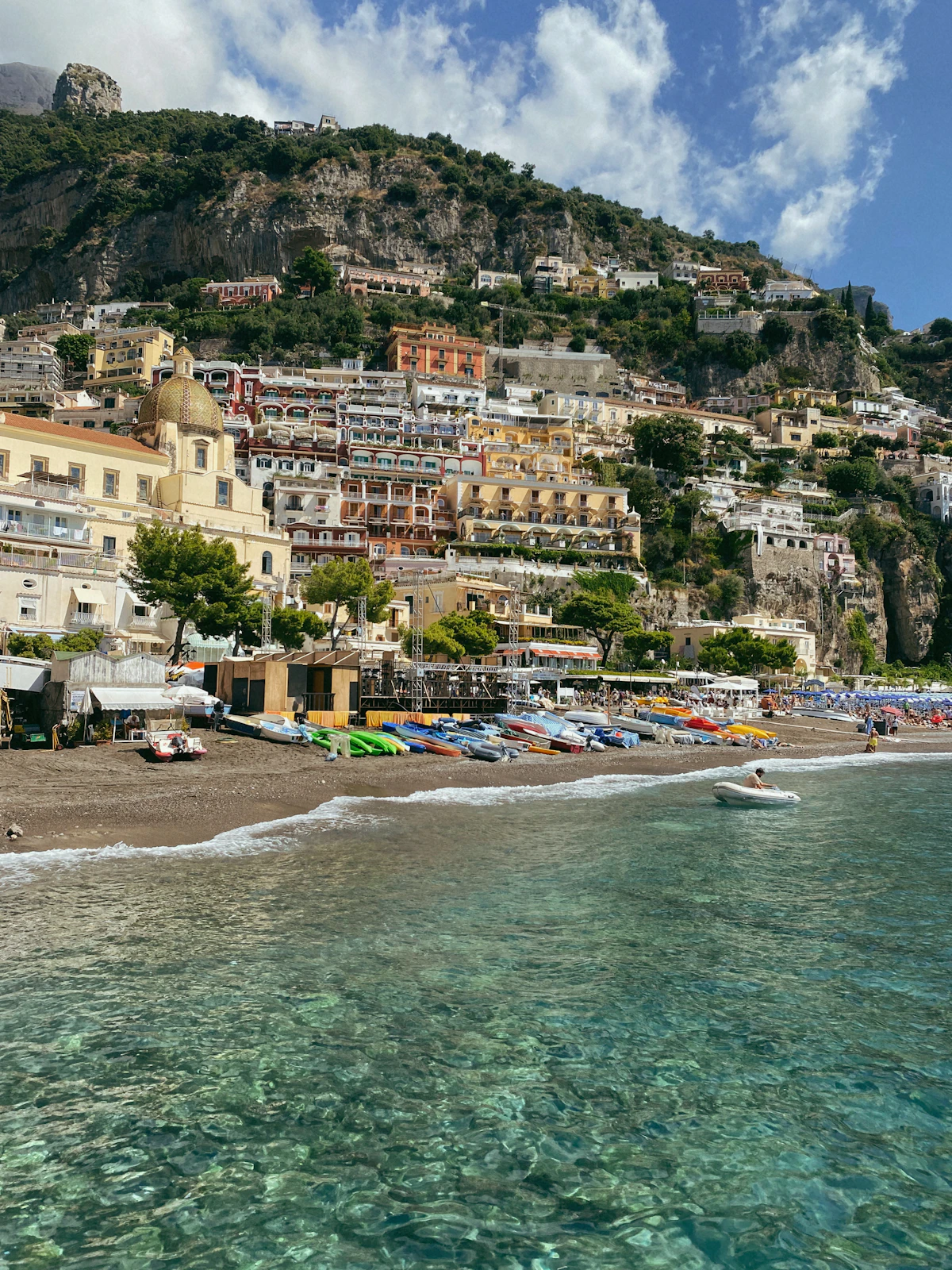
Is it competitive with Hvar, Santorini, or Barcelona?
Honestly: not in every line item. Barcelona and the Greek islands can undercut the Amalfi Coast on bare bed price — dorm beds in Hvar or Santorini start around €15–25 in shoulder season, and Barcelona has beds from €12–18 on the right dates. Positano starts around €40 in shoulder season and climbs steeply in summer. So no, the Amalfi Coast is not the cheapest option on paper.
But that is not the right test. The right test is whether Amalfi belongs in the same backpacker-planning universe as those places. It does. Once you combine a cheap London–Naples flight with public transport and a hostel bed, Positano stops being a fantasy stop and becomes a high-impact short leg. For a fuller side-by-side read, Positano vs other destinations cost and Positano on a budget cover the numbers in detail.
Why this can beat doing another Greek island
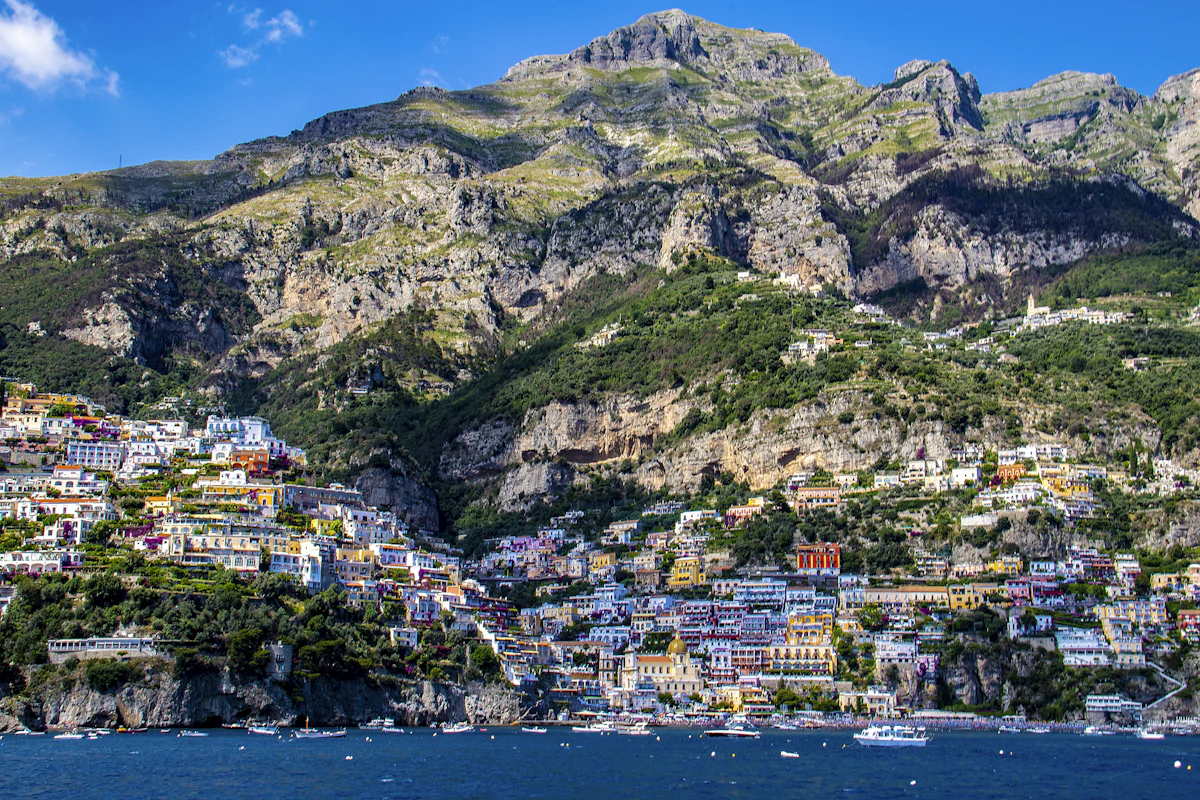
If your route already includes Greece, the Amalfi Coast gives you something different instead of more of the same. The draw here is not only beaches. It is the vertical drama of the towns, the cliff-walk energy, the bus-and-ferry movement, the access to Naples and Sorrento, and the fact that the food floor is strong even when you are not spending big.
It also works well for people travelling in short windows. Greek-island routing can become a full transport project. Amalfi can be a sharper hit: fly in, move fast, get the big visuals, eat well, hike, swim, get out. For a gap year, that matters.
Why the hostel matters more here than in some destinations
Gap-year travellers do not just need a bed. They need the social layer: people to meet, shared information, transport tips, and a place that makes a solo or small-group trip feel easy rather than fragmented.
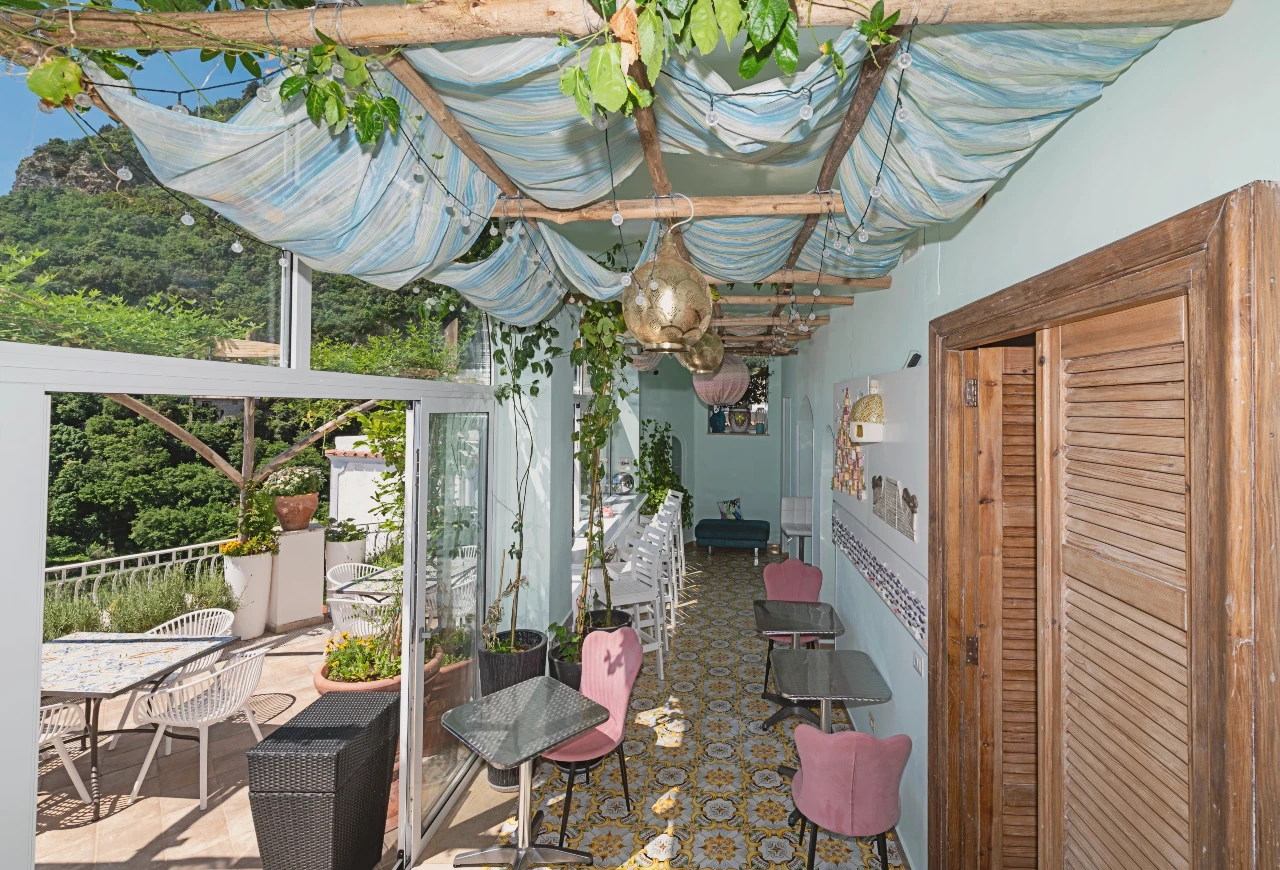
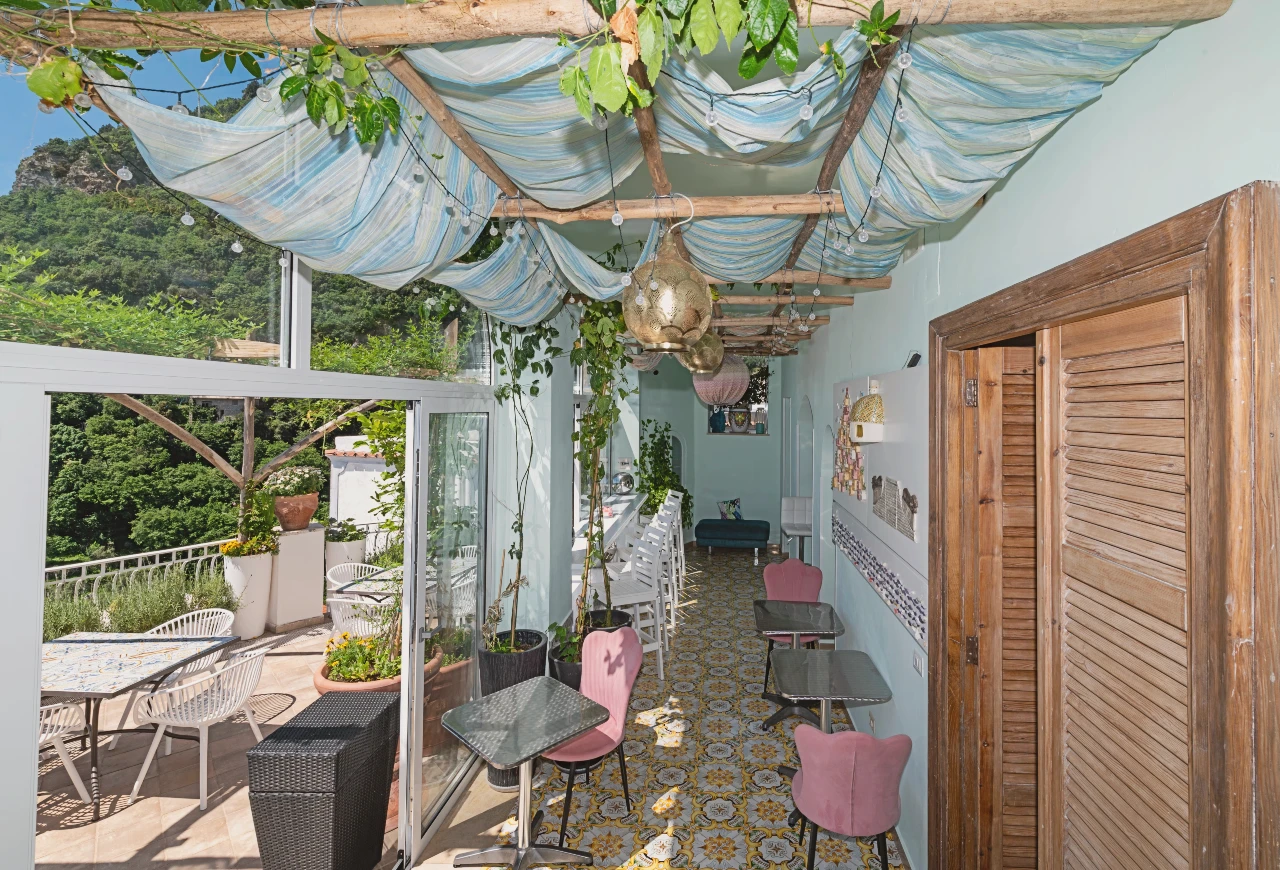
That is why Positano works better for this audience than people assume. Hostel Brikette is Positano's only hostel, and that matters. On a destination dominated by hotels, apartments, and couples stays, having the hostel means the backpacker energy is concentrated rather than scattered. From reception, staff regularly point gap-year guests toward the SITA bus timetable, the ferry schedule, and the best cheap-eat options nearby — it is a practical base, not just a bed. See Amalfi Coast public transport guide for the practical logistics once you arrive.
The version I would actually recommend
If you are London-based and budget-aware, I would not wait for the mythical 'perfect time.' Book a cheap midweek Naples flight — aim for £26–40 return, book roughly 40 days ahead. Do 5 days, stay in the hostel (from 26–40 € per night depending on season), use buses for most moves (10 € COSTIERASITA day pass), pay for one ferry leg (10 € Positano–Amalfi), and keep the rest of the budget controlled with simple food (7–18 € per meal) and free viewpoints.
That gets you the Amalfi Coast in a way that feels real, social, and properly memorable — without turning one stop into a financial mistake.
Tips
- Book London–Naples roughly 40 days ahead on a midweek flight — fares can drop to £26 return at the cheapest end.
- Travel with cabin luggage only. Checked bags add £20–40 each way on budget carriers — roughly the same as a night's accommodation.
- Buy the 10 € COSTIERASITA day pass on any day with two or more bus rides. A single Positano–Amalfi SITA ticket is 2.60 €.
- 5 days is the sweet spot for most gap-year trips: enough for Positano, one ferry day (10 €), one hike day (free, 7.8 km), and one slower beach day.
FAQs
Is the Amalfi Coast worth it on a gap-year budget?
Yes, if you treat it as a short, high-impact stop rather than a long, loose-spending beach holiday. Cheap London access still exists — £26 return at the cheapest end of the calendar. A realistic daily budget of roughly 70–90 € in shoulder season makes it expensive but manageable for 3–5 days, especially when you lean on free activities like the Path of the Gods (7.8 km, free) and the public beach at Spiaggia Grande (0 €).
How do I get to Positano from London cheaply?
The budget chain: London to Naples by low-cost flight (from £26 return at cheapest), Alibus to Napoli Centrale (5 €, about 15 minutes), Circumvesuviana to Sorrento (4.60 €, about 70 minutes), then SITA bus to Positano (2.60 €, about 50 minutes). Total ground transport: roughly 12 €. The full step-by-step is in Naples to Positano by train and bus.
How many days should I spend on the Amalfi Coast?
Three days works for a fast bank-holiday version — one orientation day, one Amalfi/Ravello day (10 € bus pass), one Path of the Gods day (7.8 km, free). Five days is the sweet spot for most gap-year travelers. Seven days makes sense for a fuller coast itinerary. 7-day itinerary without a car has the full longer plan.
Is the Amalfi Coast just for rich people and couples?
No. It is full of expensive options, but that is not the same thing. Public transport is cheap, hostel stays exist, and Positano’s backpacker viability is tied directly to the fact that there is a hostel base rather than only hotels and villas.
How does the cost compare to Greek islands or Croatia?
It is not automatically cheaper than Hvar or Santorini on bed price alone, and Barcelona can go lower still on bare-minimum hostel rates. But current hostel listing pages show Positano firmly inside the same broad backpacker-planning universe rather than in a separate luxury-only category.